The Southern Utah National Cemetery, located at 2181 West 1600 South, was dedicated on September 10, 2025. It is one of over 150 Veteran cemeteries across the nation. Close to 95% of Veterans have a …
U.S. and POW/MIA flags flying near a columbarium at Southern Utah National Cemetery. (Courtesy: U.S. Department of Veterans Affairs)
CEDAR CITY, Utah (ABC4) — Monday marks the first Memorial Day for the first national veterans cemetery in Southern Utah.
The Southern Utah National Cemetery, located at 2181 West 1600 South, was dedicated on September 10, 2025. It is one of over 150 Veteran cemeteries across the nation. Close to 95% of Veterans have a VA or VA grant-funded burial option within 75 miles of their home.
U.S. and POW/MIA flags flying near a columbarium at Southern Utah National Cemetery. (Courtesy: U.S. Department of Veterans Affairs)
The cemetery is one of eight cemeteries designated under the “Rural Initiative.” The assistant director of the cemetery, Chrissy Dixon, told ABC4.com that the initiative helps “ensure that veterans have a close place to bury their loved ones and their families.”
“This dedication expands VA’s initiative to provide Veterans living in rural locations with final resting places closer to their homes,” said VA Secretary Doug Collins. “Generations of families will come to visit and remember their loved ones here — a place of spiritual comfort and healing. We will not forget the sacrifices and commitment of those interred in this sacred ground.”
Just over eight acres of the land was acquired for the cemetery in September 2018. Currently, just two acres have been developed for use. Construction started in September 2023 and cost nearly $12 million. The project resulted in an approximate $7 million in economic impact to the local economy. It’s expected to meet the burial needs of nearly 15,000 veterans in the surrounding areas of Cedar City and St. George.
Advertisement
“As a veteran myself and seeing the community come together, it’s always uplifting to see people remember our history, the history of our nation and everything that veterans have done in service of this nation and making the ultimate sacrifice, and even those who didn’t, knowing that they spent their lives giving whatever amount of time of service to this nation,” Dixon said.
The first phase of the cemetery in September included 28 traditional gravesites, 345 in-ground crypts, 320 columbarium niches, a memorial wall for 192 markers, 1,204 standard and 34 oversized pre-placed crypts, a committal shelter for interment memorial services, an assembly plaza, restrooms and a pump house.
Dixon said that this is one of 167 National Cemeteries across the nation, and she added that this cemetery is a benefit for veterans. “I want them to know that this benefit exists,” she said.
Joseph Degolyer contributed to this story.
Latest headlines:
Copyright 2026 Nexstar Media, Inc. All rights reserved. This material may not be published, broadcast, rewritten, or redistributed.
A Saratoga Springs man who was the focus of a weekend Amber Alert appears to have abducted his two young boys and fled to Mexico, police say. Investigators say the man just quit his job, had financial …
SARATOGA SPRINGS, Utah (KSL) — A Saratoga Springs man who was the focus of a weekend Amber Alert appears to have abducted his two young boys and fled to Mexico, police say.
Investigators say the man just quit his job, had financial troubles, was in a custody dispute over the children, and may have been planning the abduction for weeks.
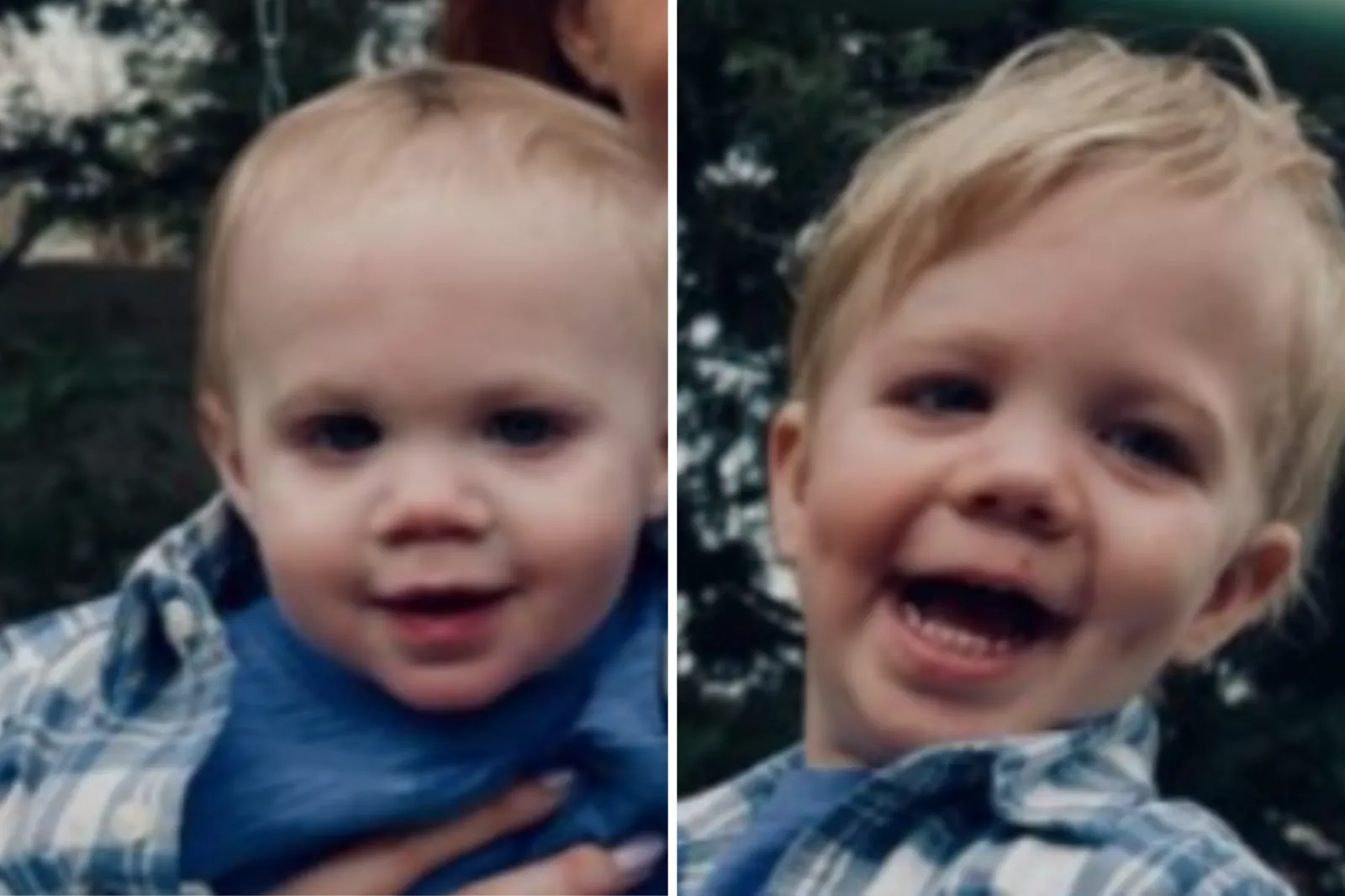
Police issued an Amber Alert late Saturday and early Sunday, saying the two boys — ages 10 months and 22 months — are in danger and were taken by their father, Dane Stephen Richman, 46, of Saratoga Springs.
He was charged Sunday in 4th District Court with two counts of custodial interference, a third-degree felony.
“There is concern for the safety and well-being of the children as the suspect has been seriously depressed, selling possessions, facing financial stress, and abandoned his home,” the Amber Alert states.
On May 16, Richman picked the children up from their mother in Washington state for his scheduled visitation time, though police initially said the abduction occurred in Saratoga Springs.
On Friday morning, the children’s mother contacted Saratoga Springs police to request a welfare check after the father missed a deposition for a custody hearing scheduled that morning at 10 a.m. Richman had emailed his attorney that morning that he no longer needed her services and wouldn’t be attending the scheduled hearing, according to charging documents.
Officers then visited Richman’s home, but no one was there. Police said there was no cause for concern at that point. Court documents, however, indicate that “officers noted that the home appeared to look vacant from the outside.”
The mother was scheduled to pick up the children at his house at noon on Saturday, but when he didn’t show up, she contacted police again at 12:35 p.m. Officers began talking to neighbors to determine the last time Richman or the two boys were last seen.
“No friends, family or other contacts have been able to reach Dane, including the police department attempts,” an arrest warrant states.
Police learned that on Monday, May 18, Richman’s black 2025 Toyota Camry had some service done in Carlsbad, California, about 50 miles from the southern U.S. border. Investigators also obtained surveillance images that identified Richman in Southern California, according to the charges.
Advertisement
Richman’s cellphone location was last reported near the Mexican border at 4 p.m. on Tuesday, May 19, and the vehicle crossed the border into Mexico later that day, the charges say.
Late Saturday, police issued an Amber Alert on all digital signs on Utah highways. An alert was issued to all cellphones in Utah about 7:30 a.m. Sunday. On Sunday night, a warrant was issued for Richman’s arrest.
“As detectives have continued to investigate this case, they have learned that (Richman’s) financial situation was dire, including being upside down on his mortgage after it appears that he took out an additional line of credit on the home equity,” according to court documents. Richman also unexpectedly quit his job from Fibertel LLC on May 11.
Richman’s boss said he told him he was unable to continue working because of ongoing legal battles with his ex-girlfriend over the custody of his children. The boss also noted that Richman “had originally been a quality hard working productive employee, but that over the last six months had become less reliable and more erratic,” the warrant states.
“Given Dane’s financial situation as well as the fact that he appears to have abandoned his house to foreclosure, it seems that Dane has possibly been planning this attempt to kidnap the children several days if not multiple weeks in advance,” investigators wrote in the court documments.
A neighbor told police that Richman has a satellite phone and family members said Richman is “comfortable and confidence when it comes to living off of the grid.”
Police said they are in the process of having the same Amber Alerts shared throughout Mexico.
Richman is 6 feet 2 inches tall, weighs about 195 pounds, and has brown hair and green eyes, according to the alert. Authorities said his clothing description was unknown.
The missing children are Wesley Dane Richman, a 10-month-old boy described as 2 feet 2 inches and weighing about 23 pounds with blonde or strawberry-blond hair and blue eyes, and Will Thomas Richman, 22 months old, who is described as 2 feet 6 inches, weighing about 31 pounds with blonde or strawberry-blond hair and blue eyes.
Anyone with information is urged to call police at 801-798-5600 or dial 911 immediately.
SALT LAKE CITY — Utah’s drought situation has worsened in recent weeks as its record-low snowpack melts off, even prompting Gov. Spencer Cox to issue a drought declaration. As he spoke about the dry …
SALT LAKE CITY — Utah’s drought situation has worsened in recent weeks as its record-low snowpack melts off, even prompting Gov. Spencer Cox to issue a drought declaration.
As he spoke about the dry conditions, federal forecasters unveiled new long-range weather models that signal some hope on the horizon.
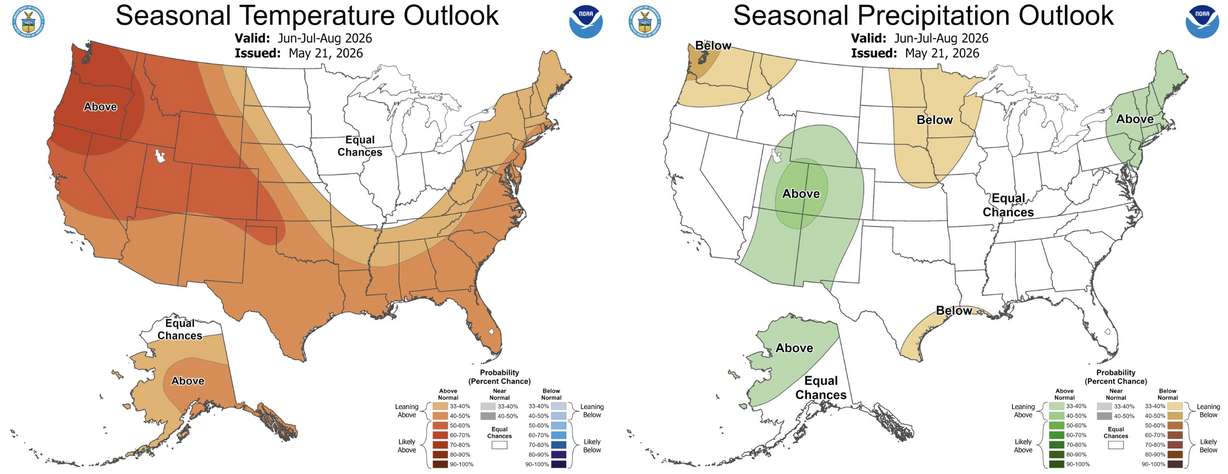
Most of Utah and the Four Corners states are listed as having stronger odds for above-normal precipitation this meteorological summer, which runs from June 1 through Aug. 31, according to an updated three-month outlook from the National Weather Service’s Climate Prediction Center released on Thursday.
Experts say that it won’t solve all the problems caused by the poor snowpack, but it could help ease some of the challenges the state is facing this summer, should the forecast come to fruition.
“It’s kind of what we’ve been hoping for,” said KSL meteorologist Matt Johnson. But he and others warn that a projected El Niño oceanic pattern this summer may affect how everything plays out.
What’s expected this summer?
The center’s report lists most of Utah as having between a 33% and 50% shot of above-average precipitation throughout the meteorological summer months of June, July and August. Utah’s western edge is listed as having “equal chances,” meaning there’s no clear signal for a wetter, drier or near-normal season, while the strongest odds are in eastern Utah.
The state also has a 40% to 50% probability of above-normal temperatures, potentially adding to a trend for this summer and the year as a whole.
These maps show temperature and precipitation probabilities across the U.S. for the upcoming meteorological summer months of June, July and August. Utah’s odds lean slightly in favor of a hotter but wetter summer. (Photo: National Weather Service Climate Prediction Center)
However, there are many caveats to consider, starting in the Pacific Ocean.
While its weather impacts are more pronounced in the winter, a summer El Niño can affect the Western monsoon, said Basil Newmerzhysky, fire meteorologist for the Great Basin Coordination Center.
Western monsoons occur when moisture from the oceans is drawn over the region, producing showers and thunderstorms. These typically develop in Arizona and New Mexico by mid-June, before reaching Utah by mid-July. They can linger into August and September, too, but the oceanic pattern can alter timelines.
“It’s really tricky right now. If the El Niño strengthens a little bit more, that monsoon can be delayed by several weeks,” Newmerzhysky said, noting that it typically still arrives in these scenarios, but potentially in August.
El Niño’s potential impacts could also create periods of stronger moisture at one point of the summer and not evenly across the season, meaning potentially dry conditions at the start. Great Basin Coordination Center officials previously said it could “make or break” Utah’s fire season.
An El Niño setup can also push the monsoon eastward, which is likely why models hint toward eastern Utah having stronger precipitation odds. It’s going to depend on the predominant high-pressure and low-pressure systems set up over the summer, Johnson said.
All of this is probabilistic and doesn’t project how much more above-normal any precipitation could be, though, which are other caveats.
Monsoonal moisture is also notoriously difficult to forecast. Gulf moisture mixes with heat that creates isolated afternoon showers, which can create massive downpours in some areas while skipping neighboring areas in some cases.
“The likelihood that we see above-normal precipitation over this three-month period is enhanced. The signal is definitely there for it to happen,” Johnson said, adding there’s no guarantee that it will happen for everyone in the state.
Why it matters
A productive monsoon wouldn’t fix all of the state’s water woes. The state’s reservoir system, which relies more on snowpack runoff, is 70% full, slightly below the median average for May. It’s the first time it’s been below the median in years, following the record-high snowpack in 2023.
When combined with current drought conditions, monsoons can also cause damaging floods.
Yet, if the right conditions align, monsoons can improve soil moisture and groundwater supplies while reducing fire risk and evaporative losses from lakes and reservoirs.
That would be the ideal situation for Utah, given its drought.
“It’s going to be interesting to see how this all pans out,” Johnson said.
The Key Takeaways for this article were generated with the assistance of large language models and reviewed by our editorial team. The article, itself, is solely human-written.
An AMBER Alert issued for the two boys says they are in danger of “serious bodily harm or death.” Their father has been identified as a suspect.
Two Utah toddlers are missing and facing “imminent danger of serious bodily harm or death,” after their “seriously depressed” father allegedly failed to attend a custody exchange.
An AMBER Alert was issued for the two boys, Will Richman, 22 months and Wesley Richman, 10 months, in Saratoga Springs, Utah, on Saturday, May 16.
One relative posted: “Please, we need your help and prayers for these boys.”
The AMBER Alert described their father, Dane Stephen Richman, as “seriously depressed,” and under financial stress. The alert, issued by the Utah Department of Public Safety, said that he had been selling his possessions and had abandoned his home.
Richman has been identified as a suspect. The children’s mother contacted the police to request a welfare check on Thursday, after Dane Richman missed a court-related deposition in an ongoing custody case, according to a report from KUTV.
The mother contacted police again on Saturday, after the children were supposed to be returned in a custody exchange, and no one showed up.
That call triggered the AMBER Alert.
The AMBER Alert states that “The first suspect is identified as Dane Stephen Richman. He is 6 feet 2 inches tall, weighing 195 pounds. He has brown hair and green eyes.”
The two boys have blonde hair and blue eyes. Will Richman is 2 feet 6 inches, and weighs about 31 Ibs. Wesley Richman is 2 feet 2 inches and weighs about 23 Ibs.
Authorities said that they are believed to be in a Black Toyota Camry with a Utah license plate A561HL, but note that the vehicle could have a temporary tag and that the license plate may not be visible.
A woman named Kate Walters shared a post to Facebook and identified herself as a family member. “My sister’s children have been abducted,” she wrote in the post, adding, “Please, we need your help and prayers for these boys.”
What is an AMBER Alert?
An AMBER Alert—short for America’s Missing: Broadcast Emergency Response—is an emergency notification system designed to notify the public when a child is believed to have been abducted and faces imminent danger of serious injury or death.
When law enforcement confirms that a child under 17 has been taken and meets activation criteria, the alert is issued. It pushes details about the child, the suspected abductor, and any associated vehicle across multiple channels, including Wireless Emergency Alerts, TV and radio broadcasts, and highway message boards.
Since its launch, the AMBER Alert system has been credited with helping recover more than 1,000 missing children across the United States.
The goal is to enlist the public’s help in the critical early hours of an abduction. This gives law enforcement additional eyes and ears to aid in locating missing children and apprehending suspects. Officials emphasize that such alerts are time-sensitive and are often deployed within hours of an abduction to maximize the chances of safely recovering a child.
Utah is already facing drought concerns due to the lack of snowfall this past winter. A local river guide feels the water levels are okay right now, but they’re preparing for the worst.
MORGAN COUNTY, Utah — Bridget Matley and her friends, Maisie Bladt and Nessa Richardson, took on the Weber River from start to finish on Sunday. They are visiting Utah for Memorial Day weekend and wanted to take on the challenge of white-water rafting.
“I’ve always wanted to white-water raft… It seems fun,” Matley said.
“I’ve done it a couple times, but it wasn’t that fun before, because it was like all easy stuff, and I wanted to do something harder,” Bladt added.
Little did they know, it is one of the most challenging times to do this.
“We think it’s going to be a low water year,” said Dawna Zukirmi, owner of Destination Sports. “It’s a little more challenging to get through. There’s a lot more rocks exposed. You really have to pivot to avoid them.”
It seemed Matley and her boat agreed with that.
“We hit a rock — it was so scary. We went backwards, and we were going on the biggest rapids ever, and it was so scary, but so fun,” Bladt said.
The state of Utah is already facing drought concerns due to the lack of snowfall this past winter, and while Zukirmi feels the water levels are okay right now, they’re preparing for the worst.
“We have our backup plan. If we can’t get rafts through, we can offer guests kayaking trips, and when we run out of water, we might be asking people if they’d like to go for a hike,” she said.
Zukirmi said the last time they had to cut rafting short was back in 2021, and it doesn’t help that they already had a slow winter season.
“People come here for the snow and look out their hotel window and are not inspired to go out snowshoeing because they don’t see any snow,” she said. “I expect it’s going to be a shorter season. Most likely will end at the end of July or middle of August.”
While Zukirmi added that there are a lot of changes she hopes to see for water conservation in Utah, she hopes those watching at home will do their part in these desperate times.
“If people conserve their water and follow the recommendations for how many times a week they should water instead of watering every day, we might be able to have water through the summer,” she said.
Wyoming’s looser liquor laws — and higher elevations — make for memorable nights and steady business in Evanston on the state line with Utah. It’s …
Katie Chandler, who works as a bartender at Kate’s Bar in Evanston, can spot Utah residents right away. They’re the adults looking self-consciouslyover their shoulders before ordering a beer and a shot, like middle schoolers breaking the rules.
Chandler gives them a sweet smile when she serves them their drinks, along with a piece of friendly, free advice.
“I always warn the people from Utah to be careful,” she told Cowboy State Daily. “Because we are at a much higher elevation, and you do get drunker quicker.”
Chandler, an Idaho transplant who has lived in Evanston for five years, experienced this while barhopping the first time in Evanston. She was drinking about one 5% seltzer an hour, which normally wouldn’t be a problem for her.
But after the second one in as many hours, it felt as if she’d downed twice as many drinks in half as much time.
“I was like, ‘Babe, we gotta walk home,’” she said. “So, I always warn people now: drink some water and stay hydrated.”
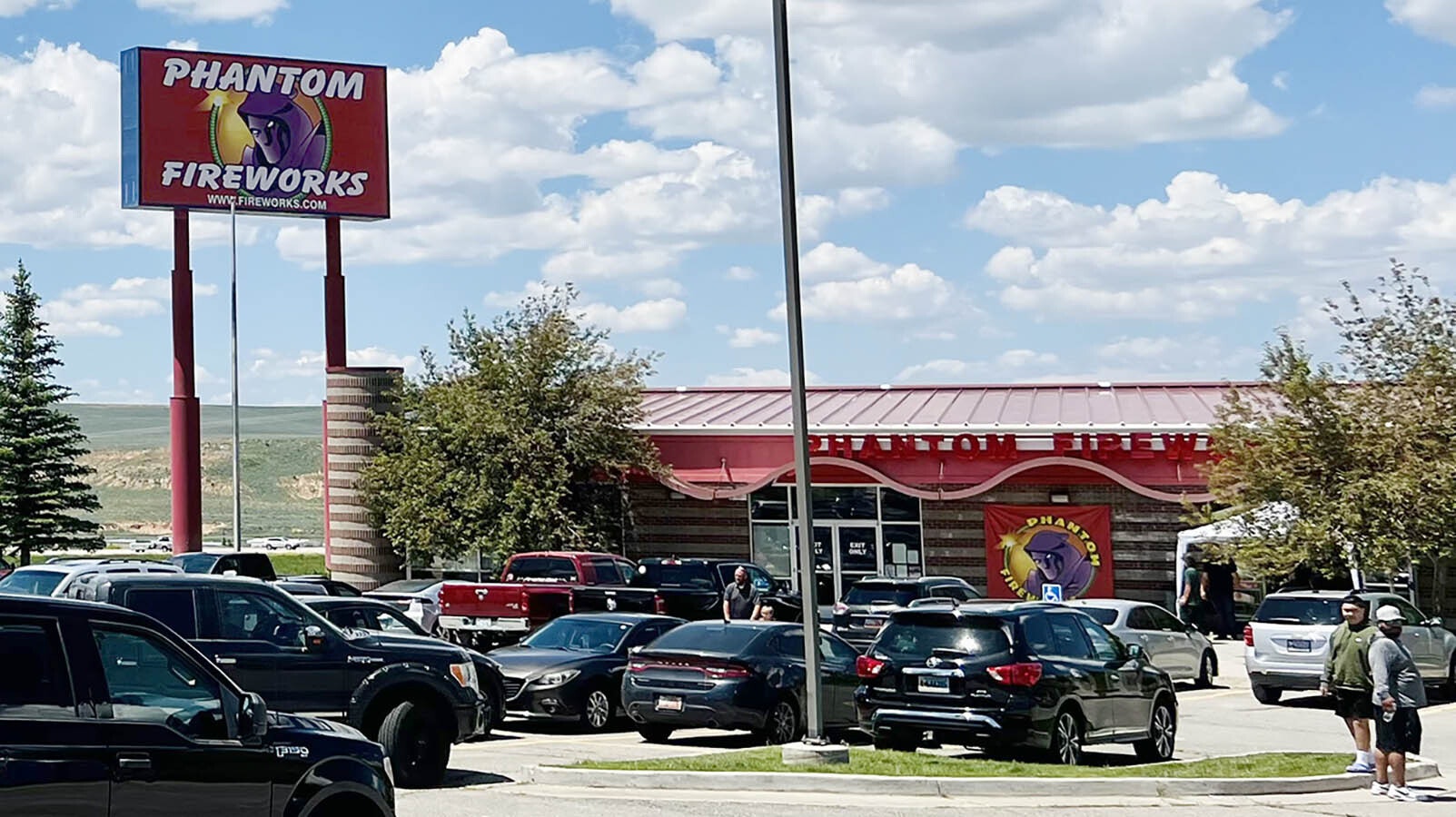
Just across the state line, Evanston is the first place people from Utah hit when leaving their state to dabble in vice. That state’s stiff liquor laws push some to make a run for the border to get stronger drinks and buy booze, along with placing bets and buying fireworks.
A new Utah law that went into effect Jan. 1 bans people convicted of DUIs with blood alcohol content measurements of 0.160% or greater from buying booze. That makes Evanston’s bars and liquor stores enticing for those who can’t buy alcohol close to home.
Phantom Fireworks in Evanston, Wyoming, sees thousands of customers a year from Utah, where most fireworks are illegal. (Courtesy Phantom Fireworks)
This One Time A Utahn Walked Into An Evanston Bar …
Kate’s Bar isn’t the only place in Evanston where the bartenders have stories about Utahns and their liquor.
They’ve become the punchline in many off-hand jokes, and people love to tell their own “this one time, a Utahn walked into a bar in Evanston” jokes to whoever will listen.
Rhonda Berlener, the general manager at Suds Bros. Brewery in downtown Evanston, has dozens of them.
She, too, can spot the Utah “newbies” as soon as they sit down.
They’ll order a beer, finish it, then carefully ask if they can have a shot now. It’s like they’re waiting for someone to swoop in and tell them it’s against the rules.
“‘OK, so we’ll take a beer, and then as soon as we’re done, we’ll take a shot,’” she recalled one Utah couple saying. “And we’re like, ‘Well, we can just bring you that shot.’ And they’re like, ‘What?’ And we’re like, ‘You’re not in Utah anymore. We can line them up. How many do you want?’”
Some get so tickled at the idea they can have more than one drink in front of them at once that they go a little overboard, ordering a whole line of shots across the bar, just because they can.
The situation has led to signs at some establishments poking fun at Evanston’s Utah neighbors — like the tavern which posted a sign making it crystal clear that the place really is a bar, just in case anyone from Utah was feeling the least bit confused.
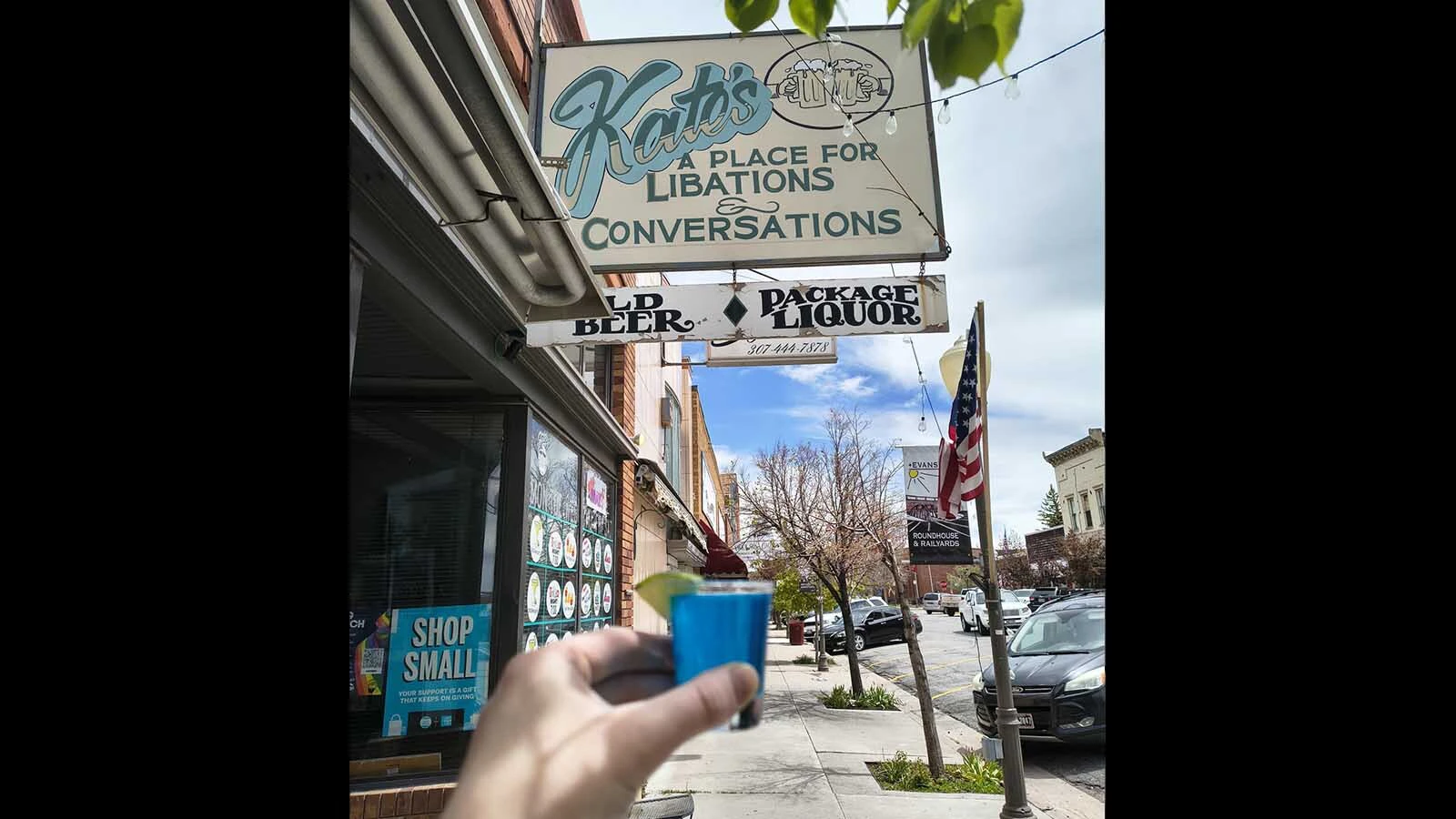
Kate’s Bar is one of the Evanston watering holes that serves a lot of Utah residents who come across the state line to drink in Wyoming. (Courtesy Kate’s via Facebook)
The Joke Goes Both Ways
The funny stories run both ways, entertainer A.J. Lamb told Cowboy State Daily.
He still laughs about the time he and a buddy discovered Utah’s famously weak beer at a party fresh out of college. At that time, Utah beer had a legal maximum of 3.2% alcohol content by volume. It was like drinking water to Lamb and his friend.
It soon dawned on them that no one at the party was keeping up with them. They made a game of that, challenging anyone to outrank them. They still barely felt a buzz, even after guzzling a heroic amount of beer.
A couple of weeks later, some of the Utahns from the party called Lamb up and said they were coming to Evanston for a rematch. They were “trained up and ready,” Lamb recalled with a chuckle.
What they didn’t count on was full-strength Wyoming beer at elevation.
After just a handful of beers over a couple of hours, the Utah drinkers were wrecked.
One managed to make it to his hotel room, though perhaps not the bed. The other fell asleep somewhere outside the hotel. The third landed in the Uinta County jail.
The takeaway line, which Lamb still uses when he’s talking to Utah friends, is “don’t drink with people from Wyoming.”
Here’s a funny, forgotten fact about that 3.2% beer, which was still in use up until 2019. When the law finally died, Budweiser brought its Clydesdales to Salt Lake City for a little parade — actually a funeral procession.
Pallbearers carried a coffin that said “RIP 3.2% Beer.” Others held up signs that read, “Bud Heavy is coming Nov. 1!”
If Utah residents are the punchline in Evanston drinking jokes, it’s usually a gentle kind of ribbing, Lamb said, the kind where people don’t feel bad about laughing at themselves with you.
t’s all in good fun, and usually includes a dose of empathy for folks who live in a state where ordering a nightcap has become a bit like taking the Uniform Bar Exam.
“People from Utah, they come up here and they’re just blown away,” Lamb said. “It’s like they’re on another planet when they see how we do things.”
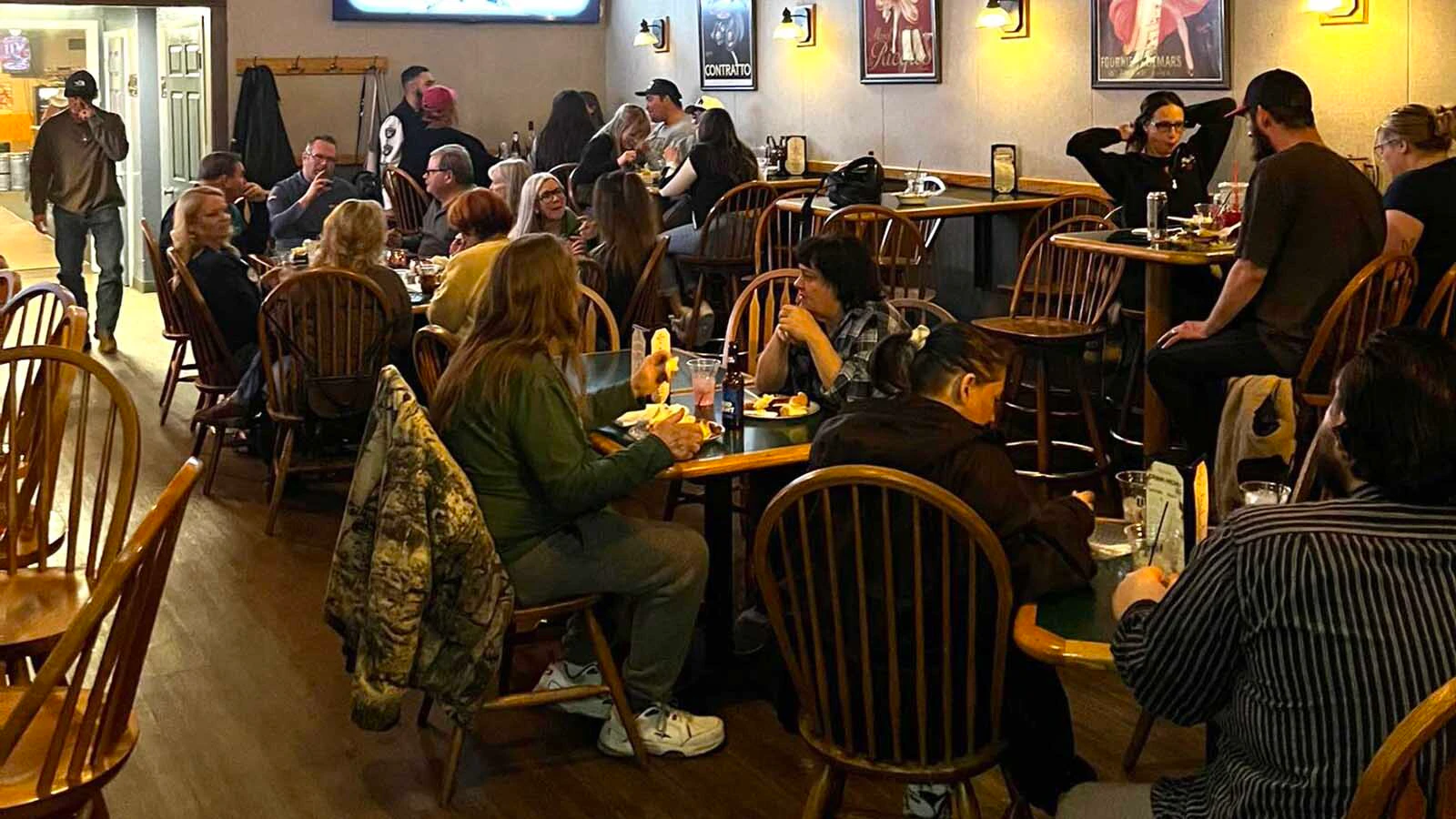
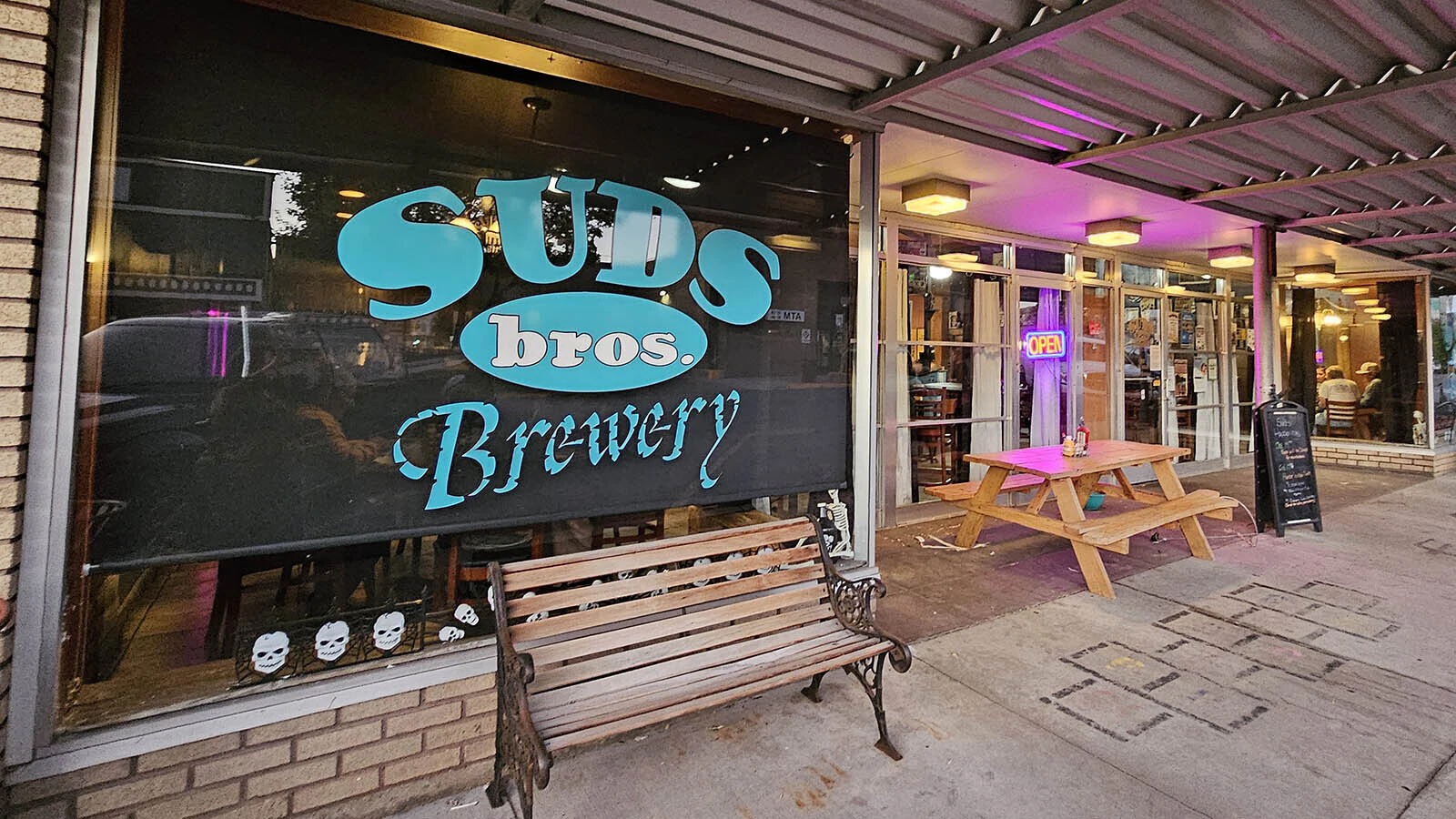
Suds Bros. Brewery is one of the Evanston watering holes that serves a lot of Utah residents who come across the state line to drink in Wyoming. (Renee Jean, Cowboy State Daily)
No Sin City
With a population around 12,000, Evanston isn’t really a Sin City. You won’t see flashy signs and supermega hotels.
It’s a friendly small town with tree-lined streets draped in charm and history.
There’s an operating drug store with old-fashioned soda shop seats. Some of the restored buildings date back to the 1880s and house art galleries, restaurants and breweries, bakeries and coffeeshops, as well as the historic Strand Theater.
Despite the “Leave it to Beaver” vibe, Evanston has long had a Sin City relationship withUtah residents. It’s where they have been coming for decades to buy things their faithful neighbors might frown upon — a taboo trifecta of booze, fireworks, and lottery tickets.
These days, Utahns can also add off-track horse betting and full-strength vapes to that shopping list.
People still remember when the Utah Highway Patrol would set up in Evanston parking lots, watching their residents carting home illegal liquor from Wyoming, then confiscating it the minute those motorists crossed the state line.
Today, the law prohibiting out-of-state liquor from crossing the Utah state line has gone away.
People may still feel like it’s hanging over them, but Utah residents legally buy up to 9 liters of liquor for personal consumption and haul it home.
Kate’s Bar is one of the Evanston watering holes that serves a lot of Utah residents who come across the state line to drink in Wyoming. (Courtesy Kate’s via Facebook)
A Tourism Tangent
But there are still a whole host of finicky liquor laws that rankle enough to keep Utahns driving to Evanston for the foreseeable future.
Restaurants in Utah can serve drinks, but only when they’re tied to food. A plate of fries, then, even if you’re not hungry, is required.
Bars and taverns can pour without food, but they’re tightly age-restricted and carefully licensed. That means families with children younger than 21 aren’t allowed.
Restaurant or bar, only one drink at a time is allowed per person at any given table. Double shots in a cocktail aren’t allowed, nor shots to chase your beer.
By contrast, Evanston’s border town offers Utahns a much simpler proposition. Walk in, grab a bar stool and order a drink. No need for a flowchart of what’s on your plate or in your glass.
The relationship between Utah’s strict liquor laws and Evanston’s more relaxed bar scene isn’t just a cultural curiosity anymore. The dynamic has become part of the town’s tourism strategy.
Business owners along Main Street talk about the importance of keeping things open for business on the weekends and maintaining a friendly, welcoming, no-fuss atmosphere.
“Those out-of-state visitors are a huge piece of keeping downtown alive,” Berlener said. “If they feel comfortable here — if they can find a place to eat, have a drink, walk around — they’ll keep coming back.”
And Evanstonians will keep telling those funny drinking Wyoming from Utah stories.
We look ahead to the Utah Jazz’s 2026 offseason, examining their roster and cap situation entering the summer.
The Jazz had a relatively quiet offseason after finishing the 2024/25 season with a 17-65 record, the worst mark in the NBA. Utah had a 52.1% chance of staying in the top four at the 2025 draft lottery, but the team lost what was essentially a coin flip (47.9%), landing at its draft floor at No. 5.
In addition to selecting former Rutgers wing Ace Bailey with the fifth pick, the Jazz were also involved in a pair of trades last summer. The first saw the team send Collin Sexton and a 2030 second-round pick to Charlotte for Jusuf Nurkic, and the second sent John Collins to the Clippers in a three-team deal that netted the Jazz a 2027 second-round pick, Kevin Love, Kyle Anderson, and a traded player exception.
It’s hard to say if the Jazz had any intentions of trying to be more competitive in ’25/26, but considering they would have owed their 2026 first-round pick to the Thunder if it landed outside of the top eight, the team was certainly incentivized to finish near the bottom of the standings again to ensure that didn’t happen. And Utah wound up being near the forefront of the tanking conversation in an unusual season in which several teams were especially focused on draft positioning due to the widely perceived strength of the 2026 class.
The Jazz would likely point to starting center Walker Kesslersuffering a torn labrum in his left shoulder in training camp, an injury he aggravated just five games into the season, as the beginning of downward trend for the rest of ’25/26. They were 2-3 when it was reported that Kessler would undergo season-ending surgery and just 16-35 after a win at Indiana snapped a six-game losing streak on February 3.
That’s also the date the Jazz made one of the more interesting deals ahead of the February deadline, acquiring Jaren Jackson Jr., John Konchar, Vince Williams Jr., and Jock Landale from the Grizzlies in exchange for Kyle Anderson, Georges Niang, Taylor Hendricks, Walter Clayton, the Lakers’ 2027 first-round pick (top-four protected), either the Cavaliers’, Timberwolves’, or Jazz’s 2027 first-round pick (whichever is most favorable), and the Suns’ 2031 first-round pick.
Memphis had renegotiated Jackson’s descending rookie scale extension during the 2025 offseason in order to bump his ’25/26 salary high enough to sign him to a new veteran extension that reflected the value of a regular All-Defensive contributor who had made All-Star appearances in two of his previous three seasons. Jackson will earn $49MM, $50.5MM and $52MM over the next three years before he has to decide whether to exercise a $53.5MM player option for ’29/30.
Utah, meanwhile, projected to have a good deal of cap room this summer, and rather than using it on free agents, the team made a pre-agency move for a player signed to a lucrative long-term contract.
The Jazz have been atrocious defensively in the four years since they traded Rudy Gobert to Minnesota, ranking 23rd, 30th, 30th and 29th in the league in defensive rating from 2023-26. Jackson, who turns 27 in September, is a former Defensive Player of the Year who’s versatile enough on offense to play in a jumbo-sized frontcourt that also features Kessler and Finnish star Lauri Markkanen.
However, Jackson’s fit with the team remains theoretical for now — he only made three cameo appearances for the Jazz after the deal, having undergone surgery to address a benign growth in his knee, and he didn’t get a chance to play with Kessler at all. While the sample size was obviously tiny, the team did perform very well when the former No. 4 overall pick was on the court.
Shutting down Jackson was the first in a series of “future-focused” moves for the Jazz, who ruled out Nurkic and Markkanen for the remainder of the season shortly thereafter. Keyonte George, who had a breakout third season and was dealing with ankle injuries at the time, only played a handful of games to finish out ’25/26.
Unsurprisingly, those tanking maneuvers resulted in the Jazz falling down the Western Conference and NBA standings, as they went just 6-25 over the final two-plus months to finish with a 22-60 record. That tied Sacramento for the fourth-worst mark in the league.
The Jazz won a tiebreaker with the Kings ahead of the draft lottery which turned out to be highly consequential, as Utah moved up from No. 4 to No. 2 on lottery night while Sacramento fell from No. 5 to No. 7. Winning the tiebreaker also guaranteed Utah could end up with no worse than the eighth overall pick, meaning the selection was guaranteed to stay with the Jazz even if they hadn’t gotten lucky in the lottery.
While four years of losing isn’t easy to stomach for fans, the Jazz are well positioned going forward as a result of their good fortune in the lottery. They’ll be able to add a potential franchise-changing talent on a very cap-friendly contract, locking in four years of team control and giving the front office time to determine the best ways to build out the roster.
Utah also enters the offseason with a surplus of future first-round picks and the financial flexibility to continue to seek upgrades on the trade market, though the club lacks the sort of mid-sized contracts necessary to add another near-max cap hit like Jackson’s.
The Jazz’s Offseason Plans
The Jazz have three major decisions to make this offseason: Deciding which prospect to select No. 2 overall, figuring out what a new contract for restricted free agent Kessler will look like, and determining how high they’re willing to go in rookie scale extension talks with Keyonte George.
Unlock Subscriber-Exclusive Articles Like This One With a Trade Rumors Front Office Subscription
Access weekly subscriber-only articles by Luke Adams
Authorities issued an Amber Alert early Sunday for two young children believed to have been abducted by a family member in Saratoga Springs, and are asking the public for help locating them and the …
EastIdahoNews.com Staff
Updated
Dane Stephen Richman, left, and missing children Will Thomas Richman, center, and Wesley Dane Richman, right, in photos released as part of a Utah Amber Alert issued Sunday. Authorities say the two children were abducted in Saratoga Springs, Utah. | Courtesy Utah Amber Alert
SARATOGA SPRINGS, Utah (KSL) — Authorities issued an Amber Alert early Sunday for two young children believed to have been abducted by a family member in Saratoga Springs, and are asking the public for help locating them and the suspect.
The suspect was identified as Dane Stephen Richman, 6-foot-2 and about 195 pounds, with brown hair and green eyes, according to the alert. Authorities said his clothing description was unknown.
“There is concern for the safety and well-being of the children as the suspect has been seriously depressed, selling possessions, facing financial stress, and abandoned his home,” the Amber Alert states.
Advertisement
Police identified the missing children as Wesley Dane Richman, an infant described as 2-foot-2 and about 23 pounds with blonde or strawberry-colored hair and blue eyes, and Will Thomas Richman, 1, who is described as 2-foot-6 and about 31 pounds with blonde or strawberry-colored hair and blue eyes.
Authorities said the abduction occurred in Saratoga Springs. Investigators said the suspect may be driving a black 2025 Toyota Camry with Utah license plate A561HL. The Amber Alert said the vehicle might have a temporary tag, and the license plate may not be visible.
Anyone with information is urged to call police at 801-798-5600 or dial 911 immediately.
Previously, an individual who donated to a candidate in Utah had their street name and number published in state records for all to see, now that has changed …
The assassination of Charlie Kirk at Utah Valley University was a shocking reminder that political violence can touch us anywhere in today’s world. When dangerous people can track down their targets with ease, national tensions can play out in our own backyards.
That’s why it’s worth celebrating the passage of a new data privacy law that could make Utah a leader in the fight against political violence. HB450, signed by Gov. Spencer Cox in March, includes a provision to protect family homes from being exposed to attacks through campaign finance reports.
Previously, an individual who gave as little as $51 to a candidate in Utah had their street name and number published in state records for all to see. Exposing exact home addresses is not necessary to provide transparency to voters, and it puts Utahns and their families at risk every time they support a campaign.
It was once possible to dismiss these privacy invasions as trivial. Few people used — let alone abused — political contribution records when they were stored on paper. But the internet, smartphones, GPS and other technological advances changed the game.
Every year, it gets easier to access, analyze and weaponize the personal information these reports contain. In an era of rising political violence, states would be wise to clean up their laws now, before donors become targets. Utah did exactly that.
HB450 updates the state’s donor records for the digital age by removing the exact home addresses of individual donors. The money will still be transparent and traceable. The donations and the donor’s identity will still be public. But extremists will no longer be handed road maps for terror.
The law, which addressed a wide range of data privacy topics, passed 66-1 in the House and 28-0 in the Senate. That overwhelming bipartisan support is a reminder that privacy is not a partisan issue.
The Federal Election Commission (FEC), the bipartisan agency tasked with enforcing the federal campaign finance laws, agrees. The FEC has unanimously recommended that Congress pass similar reforms to redact home addresses from federal reports.
As FEC Commissioner Dara Lindenbaum has noted, the risk of publishing home addresses goes beyond political violence. Many vulnerable people want to keep their address off the internet, such as victims of domestic violence or stalking, or people whose jobs put them in contact with dangerous individuals.
Efforts to update and reform these laws have been underway for years. But the recent spike in political violence — including the killing of Kirk and the assassination of Minnesota House Speaker Melissa Hortman and her husband at their home — has spurred more states to act.
Already this year,West Virginia and Minnesota have passed similar reforms to protect their citizens at home. Another donor address redaction bill is currently being considered in Arizona. Three other states — California, Texas, and Wyoming — already do not require home addresses to be exposed in political contribution records.
The lesson is clear. States don’t have to choose between transparent campaigns and donor safety. We can have both at the same time.
Redactions of sensitive personal information do not detract from campaign disclosure laws. They improve them.
Violent individuals should never be able to silence the voice of the American people. Utah leaders were wise to be proactive in safeguarding civic engagement. Hopefully the rest of the country soon follows suit.
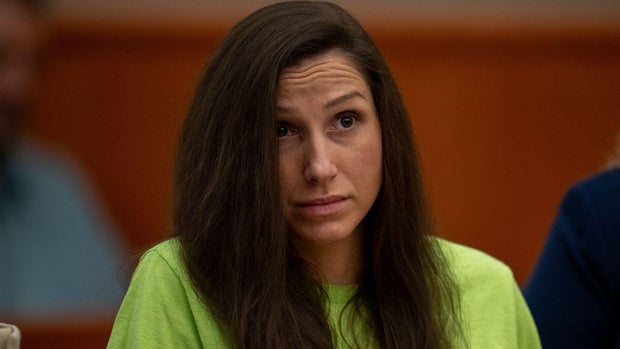
At Kouri Richins’ sentencing for the murder of Eric Richins, her husband and father of their three sons, she declared her innocence to the court and to her children. But for jurors on the case, the …
In February 2026 , in a packed courtroom in Summit County, Utah, chief prosecutor Brad Bloodworth laid out the state’s case against Kouri Richins, for the murder of Eric Richins, her husband and father of their three sons.
The case against Kouri Richins
BRAD BLOODWORTH (in court): The evidence will prove that Kouri Richins murdered Eric for his money and to get a fresh start at life.
It had been nearly four years since Eric died on March 4, 2022, of a lethal dose of fentanyl — served to him by Kouri in a cocktail, say prosecutors. She had spent almost three years in jail awaiting trial.
BRAD BLOODWORTH (in court): More than anything, she wanted his money to perpetuate her facade of privilege, affluence and success.
Eric Richins owned a lucrative contracting business, and Kouri Richins worked as a real estate agent, buying and flipping houses. She was facing not just murder charges, but also insurance fraud and forgery counts.
Greg Hall: She was absolutely convinced … that she would be found not guilty.
Greg Hall is a friend and former colleague of Kouri’s.
Natalie Morales: What made her so convinced of that … outcome?
Greg Hall: ‘Cause she knows that she didn’t do it.
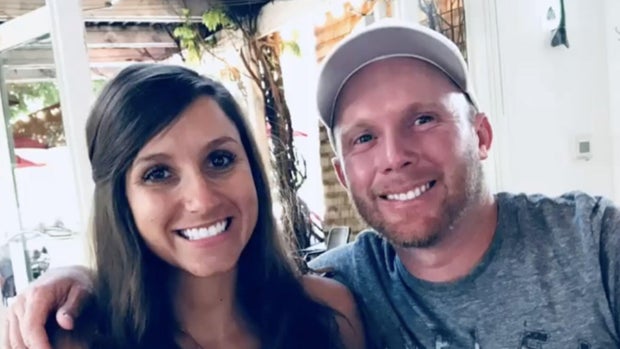
Kouri and Eric Richins
Kouri Richins/Facebook
Initially, authorities thought Eric may have died from an accidental drug overdose. But as investigators dug deeper, they concluded that Kouri poisoned Eric for financial gain.
Greg Skordas: “Watch out for Kouri, watch out if something happens to me.”
According to Greg Skordas, a spokesperson for Eric Richins’ family, Eric had raised concerns about Kouri to his family.
Natalie Morales: The night Eric died … were they immediately suspecting that Kouri took part in his death?
Greg Skordas: They suspected Kouri would take part in his death before it happened. And so when it did happen, it was everyone’s worst, you know, nightmare come true.
KOURI RICHINS TO 911 (crying): My husband is not breathing. He’s cold.
As the state built its case against Kouri Richins, her 911 call — saying she found Eric Richins unresponsive in bed — was an integral piece of evidence.
911 OPERATOR: If you need you to put me on speaker, put me on speaker – I’m going to guide you through CPR, OK?
The prosecution used the recording throughout the trial to call into question whether Kouri was even trying to resuscitate Eric.
911 OPERATOR: Start counting out loud so I can count with you, OK?
The operator repeatedly asks the phone to be put on speaker, so Kouri can listen while performing CPR.
911 OPERATOR: One, two, three, four — am I on speaker?
KOURI RICHINS: Yes.
But a prosecution digital forensic analyst testified that phone receiver sensor activity showed Kouri was actually holding the phone to her ear during the call.
CHRIS KOTRODIMOS (in court): There is a proximity sensor inside the device that activates the receiver.
Laura | Juror: The digital download expert … could actually see that Kouri did not put the phone on speaker phone … she was still holding it up to her ear. That means she wasn’t doing compressions or if she was, she was doing it with one hand.
The 911 call was impactful for jurors Laura and Eric, who requested we not use their last names.
Eric | Juror: Listening to the call, it didn’t seem like there was much effort in the compressions themselves.
The impression these jurors had of her resuscitation attempts didn’t match Kouri Richins’ description of events, which she texted to her friend, Chelsea Barney. Prosecutor Bloodworth read the messages to the jury.
BRAD BLOODWORTH (in court): “His lifeless body on my bedroom floor. … I pumped so damn hard, so hard screaming at him to come back to life that I needed him.”
Eric | Juror: Some of her text messages to a friend, she said she was screaming and beating on his chest. And the evidence did not show that.
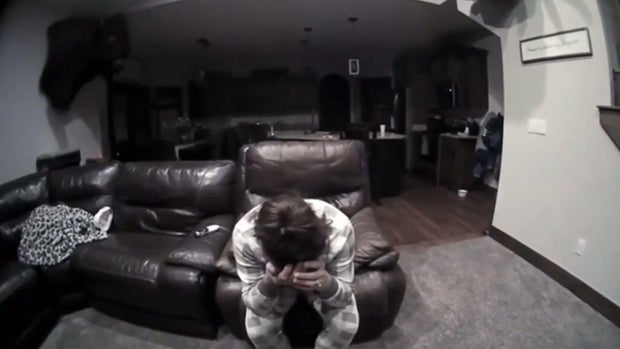
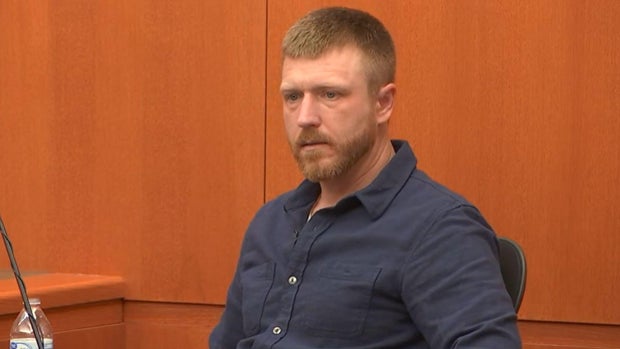
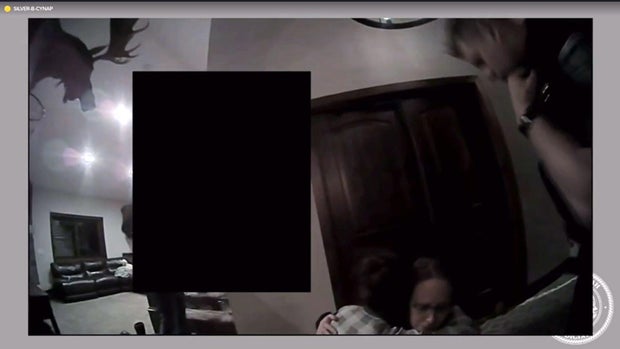
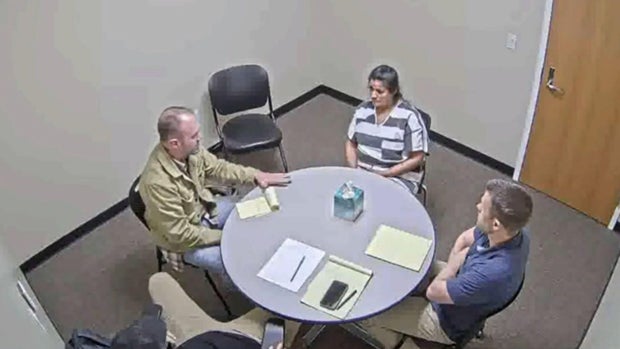
Some of Kouri’s other actions the day Eric died puzzled the jurors we interviewed, like her behavior on a deputy’s bodycam footage, shown in court.
Bodycam video shows Kouri Richins holding her head in her hands as she spoke with a deputy the night her husband Eric Richins died.
State’s exhibit
Laura | Juror: It was strange right after Eric died. Kouri was holding … her face with her hands …
Eric | Juror: It certainly looks like she was trying to hide her face, and her emotions.
DEPUTY (bodycam): — where are your children now?
KOURI RICHINS: One’s asleep in that room. Two are awake with their ear to the door.
And when the jurors compared Kouri’s behavior in the footage to Eric’s sister’s, they found the contrast startling.
Eric | Juror: Eric’s sister Katie Richins came in. She was hysterical … near — hyperventilating. And her first thought is: Where are the kids? Are the kids OK? And through that whole video, Kouri said, my kids are in that room. And one of ’em’s listening. But never did she move to go comfort those kids.
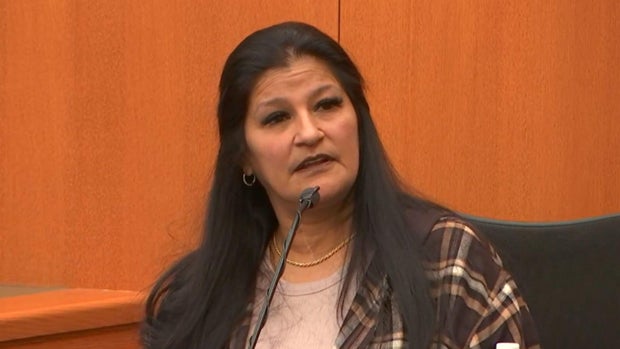
Eric’s sister, Katie, testified about arriving at the house.
BRAD BLOODWORTH (in court): On the morning that Eric died, did Kouri Richins say anything about the house that they were living in?
KATIE RICHINS BENSON: Yes. … she told me she was going to sell it.
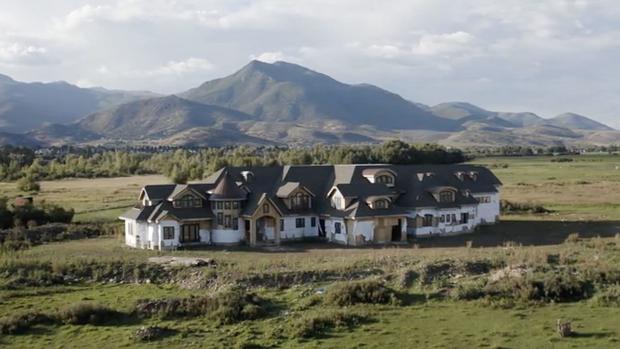
According to Katie, just hours after Eric’s death, Kouri was talking real estate: how she planned to sell their home, and how she needed to close on a house she had just purchased, known as the “Midway Mansion.”
KATIE RICHINS BENSON (in court): I had just lost one of the most important people in my whole entire life and she was planning on selling the house that he had just been wheeled out of, closing on a multimillion-dollar mansion. I could not wrap my head around it.
Prosecutors also presented evidence of something accessed on Kouri’s cellphone that morning — GIFs, seemingly celebrating coming into money.
Eric | Juror: I thought the GIFs were really odd. If she was the one that pulled them up, which it certainly seems like that is the case, that’s — just more evidence of her — state of mind at the time.
It was not clear to the jurors whether the GIFs were celebrating Eric’s death or celebrating the Midway mansion purchase. Either way, they found the timing curious.
Laura | Juror: It’s still inappropriate the day after her husband passed away that she’s accessing these. … So, it was strange.
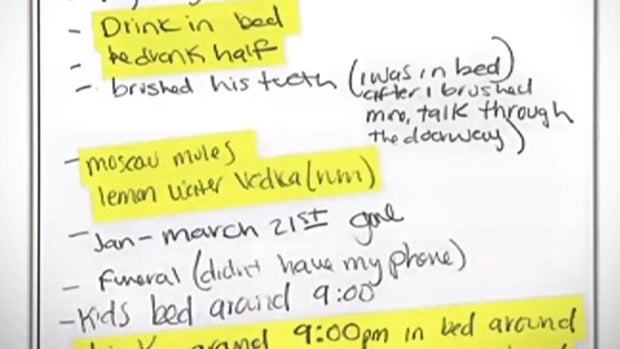
Strange behavior aside, the state’s case hinged on proving Kouri intentionally poisoned Eric; that he did not die of an accidental overdose. The prosecution contends it was Kouri who administered the fentanyl — either in a cocktail, called a Moscow mule, or in a lemon drop shot, that she prepared for Eric.
Prosecutors told the jury this note found in a kitchen cabinet in the Richins’ home chronicles how Eric Richins was killed by his wife.
State’s exhibit
Investigators found a note in a kitchen cabinet, which the prosecution says chronicles how Kouri killed Eric.
BRAD BLOODWORTH (in court): Notice that here she writes “drink in bed.”
And the prosecutor told the jury about something else authorities found unusual. In the incident report, describing what happened that night, Kouri immediately writes about having a drink around 9:15 p.m. to celebrate work.
Laura: Her story that night that she wrote started with Eric drinking a drink that she made. … why would her story start then? … Why wouldn’t it start when she walked in the door and found that he wasn’t moving? That was just one of these really subtle things that I thought was really important.
Also important for jurors was knowing how Kouri obtained the fentanyl. For that, prosecutors turned to a witness who became a controversial figure in the case: Kouri’s housekeeper.
BRAD BLOODWORTH (in court): Did you ask Kouri Richins about Eric’s death?
CARMEN LAUBER: Yes, I did.
BRAD BLOODWORTH: What did you ask her?
CARMEN LAUBER: I said, please tell me these pills were not for him.
Jurors find housekeeper’s testimony credible
Carmen Lauber was Kouri and Eric’s housekeeper and she cleaned homes for Kouri’s real estate flipping business. Prosecutors say Carmen also did something else — she supplied Kouri with the drugs used to kill Eric.
BRAD BLOODWORTH (in court): Did Kouri Richins ever ask you to purchase for her illicit drugs?
CARMEN LAUBER: Yes.
BRAD BLOODWORTH: How many times?
CARMEN LAUBER: Four.
Skye Lazaro: In a lot of ways … she is the key witness.
Skye Lazaro had been Kouri Richins attorney, before resigning from the case due to a conflict of interest.
Skye Lazaro: Carmen really was the only person who could tie Kouri to obtaining fentanyl.
Carmen testified that in the months preceding Eric’s death, Kouri asked her to get pain medication for a client, which Carmen did. Then, about two weeks before Eric died, Kouri made another request, for something stronger. Carmen says she reached out to a drug dealer friend and told Kouri she could get her fentanyl.
At trial, Carmen Lauber, Kouri and Eric Richins’ housekeeper, testifies that she purchased drugs for Kouri Richins.
Pool
CARMEN LAUBER (in court): I had texted Kouri back and told her that I had a — a friend that could get them, but they were fentanyl pills.
BRAD BLOODWORTH: How did Kouri Richins respond?
CARMEN LAUBER: She said, OK, go ahead and get ’em.
The state contends Kouri mixed that fentanyl into the Moscow mule or lemon drop shot she served Eric. Carmen, though, has an arrest record from drug charges, and is not an ideal witness.
Greg Skordas: She had a history of drug abuse, and although I think she’s overcome that … Those are who you deal with in criminal cases … They’re not always the shiniest people in the world.
The jurors we spoke with were able to look past Carmen’s history and found her credible.
Eric | Juror: I put a lotta weight on Carmen Lauber’s testimony. I found it — very impactful — very important to the prosecution’s case. And her testimony was corroborated with the digital evidence.
The state’s digital forensic expert testified about hundreds of texts messages between Kouri and Carmen, that matched Carmen’s timeline of when Kouri contacted her for drugs. Because the messages were deleted, investigators could only retrieve the dates and times, but not the messages’ content.
CHRIS KOTRODIMOS (in court): Between the two of them, about 800 text messages.
The prosecution argued, throughout the trial, that this was not the first time Kouri used drugs to try to kill Eric. Investigators learned that two weeks before his death, on Valentine’s Day, Eric became ill after Kouri served him what they say was a drug-laced breakfast sandwich.
BRAD BLOODWORTH (in court): On Valentine’s Day, it was a sandwich. When she murdered him, it was a drink.
As for a motive, prosecutors say Kouri needed money. A forensic accountant testified about her money problems.
BRAD BLOODWORTH (in court): What was the amount of Kouri Richins’ liabilities?
BROOKE KARRINGTON: Right about $8 million.
She said Kouri was in debt for nearly $8 million from her house flipping business, some of it from the recent purchase of that Midway mansion. And Eric, between his contracting business, property, and life insurance, was worth a lot.
BRAD BLOODWORTH: On the day that Eric died, his estate was worth over $4 million.
There was also evidence that Kouri took out an additional $100,000 life insurance policy on Eric, about a month before he died—and that Eric’s signature was forged — a forgery, prosecutors say, committed by Kouri.
Juror Eric | Juror: She used her business address for this policy and made herself the beneficiary. … And frankly, even as a lay person, looking at the signatures, Eric did not sign that document.
And there may have been another motive for murder. According to the state, Kouri wanted a new life with Josh Grossman, a handyman she met through her house flipping business. They had an affair for about two years.
Greg Skordas: I don’t know how much the family knew about the fact that she had a — a paramour. I don’t even know how much Eric knew about it. … that turned out to be a helpful piece of evidence that was discovered during the investigation.
Josh Grossman testified that after he heard Kouri had been arrested for Eric’s murder, by which time they had broken up, he reached out to Eric’s family.
JOSH GROSSMAN (in court) I was overwhelmed with guilt, sorrow, over my wrongdoings, you know, infidelity and uh …
Juror Laura: With respect to Josh Grossman, he seemed like a believable witness. I think we all felt really sorry for him at times that he was crying.
Josh Grossman testifies during Kouri Richins’ trial.
Pool
Josh told investigators about a conversation he had with Kouri, that now, under the lens of murder, took on new meaning. Josh, who had served with the Army in Iraq, was asked about that conversation.
JOSH GROSSMAN (in court): She asked if — if I had ever killed anybody.
BRAD BLOODWORTH: Did she ask a follow up question?
JOSH GROSSMAN: Yes. … She asked me how it made me feel or something along those lines.
The jury was also shown text messages between Kouri and Josh.
Natalie Morales (to Skye): I mean, you see those text messages back and forth, very lovey, “Life is going to be different, I promise.” “If I was divorced right now and asked you to marry me, you would?” “I just want to lay on the couch and cuddle you, watch a murder documentary, and snuggle.” … I mean, you know, I don’t know that that gets any closer to the reality of what actually happened in this case.
Skye Lazaro: Yeah, in hindsight, I don’t think those, uh, probably well thought out. … these coming in the way they did and the timing of ’em — I think certainly did not help Kouri.
Something else that did not help Kouri was the reservation she booked for a romantic getaway with Josh.
BRAD BLOODWORTH (in court): Did you know about a trip planned to the Secrets St. Martin’s Resort?
JOSH GROSSMAN: Yes.
Kouri sent Josh the reservation she made before Eric died, with the trip planned for April — a month after Eric’s death.
Laura | Juror: The reservation for the trip was damaging to Kouri. … To me that made it look like she had been planning something for a while. And at some point soon, Eric would be out of the picture.
As the investigation proceeded, Kouri said the prosecution was worried about being caught. It showed web searches Kouri made after Eric’s death, including: “luxury prisons for the rich in america,” “how long does life insrance companies takento.pay,” “if someone is poisned what does it go down on the death certificate as.”
Eric | Juror: Kouri’s internet searches … the questions that were being searched led me to believe she had a guilty mind.
Skye Lazaro: These searches … were done after she was handed a search warrant when they searched the home … it kinda takes the sting out of them. I think it’s somewhat understandable.
Natalie Morales: So this is after the fact.
Skye Lazaro: This is after, and well after, in fact.
WENDY LEWIS (in court): She was looking for information based on what she found out after Eric died.
It was one of the points that Kouri’s own defense team made, as it tried to poke holes in the entire prosecution’s case.
KATHRYN NESTER (in court) You know what you’re never going to hear, is how that fentanyl got inside of him. Because there is zero evidence of that.
Kouri Richins’ defense takes aim at prosecution’s witnesses, claims
Just outside of Salt Lake City, home to famed ski resorts including park City, is the nearly 10-acre estate that Kouri Richins was planning on flipping.
The day after Eric Richins’ death, Kouri Richins closed on a big purchase she’d made for her house flipping business: this $3.9 million, 20,000 square foot mansion in Heber City, Utah, known as the “Midway Mansion.”
CBS News
Natalie Morales: … that looks ginormous.
Skye Lazaro: It’s massive.
Skye Lazaro told us Kouri hoped to walk away with nearly $10 million in profit.
Skye Lazaro: I think this … was kind of her dream when she got into this idea of flipping houses was to be able to do properties like this.
And it was that estate, said Kouri Richins’ defense attorney Kathryn Nester in her opening statement, the couple were toasting the night Eric died.
KATHRYN NESTER (in court): Eric and Kouri Richins … were celebrating.
KATHRYN NESTER: … They were celebrating because Kouri was about to close on the biggest real estate deal that her company had ever done.
KATHRYN NESTER: They had a lot to celebrate. They also had a wonderful family.
Nester showed jurors a family photo of Eric and Kouri with their three sons — seemingly happy — and spoke about the love they shared for their boys.
KATHRYN NESTER: … And what’s more important is that the boys adored their father. … And Kouri knew that about her sons and about her family.
Nester asked jurors to consider why Kouri would poison Eric, knowing the impact it would have on their three sons.
KATHRYN NESTER: Now after you’ve listened to all the evidence in this case …You’re gonna have to decide if Kouri Richins intentionally and knowingly poisoned … the father of her kids, knowing that she was gonna cause those little boys to feel pain every day for the rest of their life for the loss of their father.
Kouri’s friend Greg Hall says Kouri would never do that.
Greg Hall: She was loving. She was kind. She was giving. … A wonderful mother.
KATHRYN NESTER (in court): Eric suffered from pain, a lot.
Nester told jurors Eric Richins lived with chronic pain —
KATHRYN NESTER (in court): … he suffered from knee and back pain related to his work. … He did hard work.
— and used drugs recreationally often taking marijuana gummies.
KATHRYN NESTER (in court): … these are all gummies that the police found in Eric’s things.
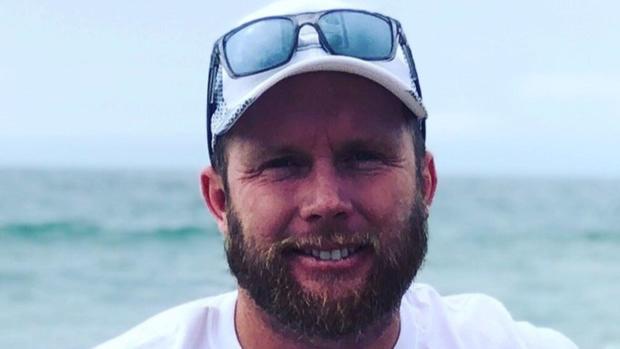
Eric Richins
Skye Lazaro
Nester said Eric also used pain medication.
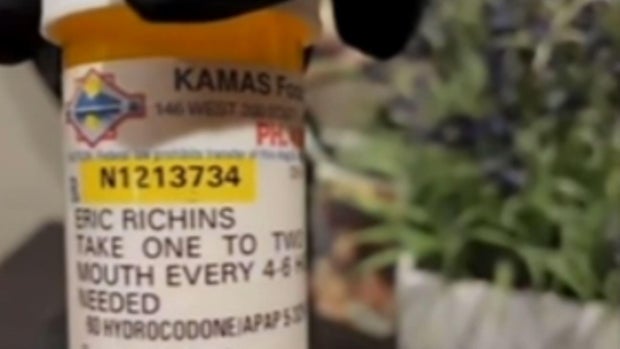
KATHRYN NESTER (in court): You’re also going to hear … that there was an empty pill bottle right next to him.
The label on that pill bottle was for the painkiller hydrocodone and it had expired in 2020. Nester suggested it was Eric who may have come into contact with fentanyl.
KATHRYN NESTER (in court): …You’re gonna hear that just a few weeks before Eric died, guess where he was, Mexico. Guess where the fentanyl comes into this country from, Mexico.
One by one, the defense challenged the state’s witnesses, beginning with Eric’s sister Katie Richins Benson, and her account of Kouri’s behavior the night Eric died.
KATHRYN NESTER (in court): And you also said that … she just stood there and did not comfort you in any way?
KATIE RICHINS-BENSON: Not that I recall.
KATHRYN NESTER: OK.
KATHRYN NESTER: … Your Honor, we’d like to play a clip. This is State’s Exhibit 1-4.
KATHRYN NESTER : OK, so that’s Kouri. Freeze it right there.
In court, the defense played bodycam footage showing Kouri Richins kneeling down to embrace Katie Richins Benson (lower right), challenging her earlier testimony for the prosecution.
Court exhibit
KATHRYN NESTER: … And that’s her squatting down to comfort you while you’re on the ground and that’s, y’all hugging, right
KATIE RICHINS BENSON: Correct.
KATHRYN NESTER: So your memory about that was clearly wrong.
KATIE RICHINS BENSON: To be fair, it was four years ago.
KATHRYN NESTER: OK.
When it came to state’s key witness Carmen Lauber, the defense pointed out that she made a deal with police in order to stay out of prison. Defense attorney Wendy Lewis played a portion of one of Carmen’s interviews with investigators.
Carmen Lauber, the Richins’ housekeeper, is questioned by investigators. The defense pointed out that she made a deal with police in order to stay out of prison.
State’s exhibit
INVESTIGATOR #1: They’re looking to pull your drug court deal and ask for seven years on your two firsts …
INVESTIGATOR #1: … The only exception to that and the only thing that they’re willing to kind of help you out with is if you can help us out with this.
INVESTIGATOR #2: And by — so he means like give us the details that will ensure Kouri gets convicted of murder.
WENDY LEWIS (in court): So that’s what they said to you.
CARMEN LAUBER: Yes.
WENDY LEWIS: … you may be getting seven years in prison on your state case.
CARMEN LAUBER: Correct.
WENDY LEWIS: But if you help them out, that’s not gonna happen.
CARMEN LAUBER: Correct.
Skye Lazaro: … the investigators keep pushin’ on her. “… We need more. That’s not enough.” … And finally in the last interview, they basically just spell it out.
CARMEN LAUBER: I love Eric. … If it was done, intentionally, he did not deserve it.
INVESTIGATOR: … we believe you and that’s why we are here working on what your get out of jail free card looks like …
Skye Lazaro: You know, it’s, “this is your one get out of jail free card. You have to basically say it’s fentanyl.”
WENDY LEWIS (in court): And you are willing to do whatever it takes to save yourself from drug — getting kicked outta drug court and going to prison, correct?
CARMEN LAUBER: I’m going to go forward with the truth. Yes.
Laura | Juror: … I think the defense was really hammering her. … And I don’t think it went over that well.
CARMEN LAUBER (in court): She said, “OK, go ahead and get the fentanyl.”
WENDY LEWIS: That’s your testimony today?
CARMEN LAUBER: When I told her what I had that’s what she said, yes.
Even if Carmen bought fentanyl for Kouri, the defense said there was no proof that Kouri used the drug to poison her husband. Kathryn Nester told the jury the cups Kouri served the drinks in were never tested that night.
KATHRYN NESTER : … The nanny ended up putting them in the dishwasher the next morning.
Eric | Juror: I think the most powerful point … the defense made is that we don’t know exactly how the fentanyl got into Eric Richins’ stomach.
Skye Lazaro: … when you have to prove murder — uh, you have to prove … that she’s the one that administered — the fentanyl to him.
The defense pushed back on the state’s claim that Kouri had tried to poison Eric weeks earlier with that Valentine’s Day sandwich. Kouri’s friend Aly Staking said the couple downplayed that episode as Eric having an allergic reaction.
ALEMITU STAKING (in court): He took a bite of the sandwich and got an allergic reaction and had to shoot himself with an EpiPen.
WENDY LEWIS: Was everyone laughing?
ALEMITU STAKING: Yes, we were all laughing and we jokingly said, don’t eat what Kouri feeds you.
WENDY LEWIS: OK. And did Eric appear upset about what had happened prior with the sandwich?
ALEMITU STAKING: No.
And as for the financial motive that Kouri was broke? Skye Lazaro says Kouri Richins’ multimillion-dollar debt was typical in the house flipping business.
Skye Lazaro: That’s what they do for a living, is they invest in homes to flip.
Natalie Morales: So you’re saying it’s part of the business?
Skye Lazaro: Right.
Natalie Morales: That you’d get in — in debt, and then you flip the house, you sell it, and then you make your money back.
Skye Lazaro: Absolutely.
And that $100,000 life insurance policy the state claimed wasn’t signed by Eric? Nester said there is an innocent explanation.
KATHRYN NESTER: I’m telling you right now, wives everywhere sign their husband’s names on a lot of things. You’ve gotta find that she did it without his knowledge. And I don’t know how they’re gonna prove that.
The defense also downplayed Kouri’s affair with Josh Grossman, who testified they never went on that romantic getaway Kouri had booked for them.
WENDY LEWIS (in court): … then Kouri ended the relationship, correct?
JOSH GROSSMAN: Right.
Eric |Juror: It was a little bit difficult to understand what the situation was … with Josh Grossman, because she did seem to drop him pretty quickly …
Natalie Morales: … do you think that Josh Grossman’s relationship with Kouri had anything to do with Eric’s death —
Greg Hall: No, no.
Greg Hall: … if that were the case, after Eric passed away, that relationship would have continued, not been tapered off. It doesn’t make any logical sense. …
On March 12, 2026, after three weeks and 40 witnesses from the state, the prosecution rested its case.
The jurors say they were expecting to see defense evidence and hear from their witnesses.
Laura | Juror: I’m like, “OK. Now, we can hear the rest of the story.”
But what happened next caught everyone off guard.
“Now we’ve seen just about everything in this trial,” says surprised juror
Laura | Juror: … my mouth just dropped open. … I was just like, “What?” I was so shocked and I was actually really disappointed.
Thirteen days into the trial, Judge Richard Mrazik asked Kouri Richins’ defense team about their first witness.
Eric | Juror: … I was totally prepared for however many days or weeks of vigorous defense.
JUDGE RICHARD MRAZIK (in court): … Who is, uh, defense counsel’s first witness?
WENDY LEWIS: Um… can we have just a minute? We have — we have a couple of options …
JUDGE RICHARD MRAZIK: Understood.
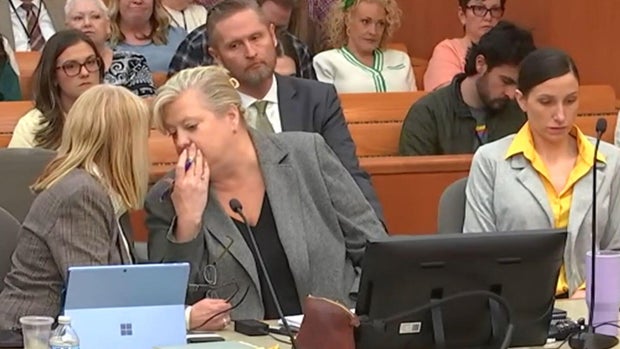
Defense attorneys Wendy Lewis and Kathryn Nester whisper to each other as they discuss their options on who to call as a first witness. Defendant Kouri Richins sits to their right.
Pool
But the option defense attorneys Wendy Lewis and Kathryn Nester chose was one these jurors were not expecting.
WENDY LEWIS (in court): Your Honor, actually at this time the defense intends to rest.
Eric | Juror: … I was like, “Seriously?” …Now we’ve seen just about everything in this trial.
Laura | Juror: I was disappointed … because I’m like, you know, I felt like there was more to the story. And they denied us access to that.
JUDGE RICHARD MRAZIK (in court): I just want to make sure you’ve consulted with your client about this.
WENDY LEWIS: Absolutely.
JUDGE RICHARD MRAZIK: Ms. Richins, may I ask you two direct questions?
KOURI RICHINS: Yes.
JUDGE RICHARD MRAZIK: Do you understand that you have the right to testify at trial?
KOURI RICHINS: Yes. I do.
JUDGE RICHARD MRAZIK: … are you following your attorney’s advice in waiving your right to testify at trial?
KOURI RICHINS: Yes, I am.
JUDGE RICHARD MRAZIK: I accept your waiver, I find it is knowing and voluntary.
Laura says she at least expected the defense to present testimony about Eric’s alleged drug use and what role, if any, it played in his death.
Laura | Juror: … they were just hinting, ever so slightly, at these things, without backing it up. So I was really hoping for some testimony, if that’s really true or you just trying to confuse, everything.
Greg Skordas, who happens to be an attorney himself, says perhaps the defense saw no need to call witnesses because it felt there was enough reasonable doubt.
Greg Skordas: … if you think you’re winning after the prosecution puts on its case, then there’s no reason to put on a case, because you could only hurt yourself. … And so why—why even risk putting on a witness that could hurt you.
Laura says throughout the trial she would sometimes look over at the defense table.
Laura | Juror: … there was really no vibe coming from her. Like, I couldn’t sense whether she was upset, or angry, or sad. She had a very flat affect.
Natalie Morales: Was that part of it, the likability of Kouri Richins at that point? Do you think they saw a woman who was having an affair, who was in debt.
Skye Lazaro: I think that’s how it certainly could be taken. … There never was a real opportunity … to humanize her, to make her likable, to make her seem like a person who wouldn’t do that.
JUDGE RICHARD MRAZIK (in court): Mr. Bloodworth, would you like to proceed?
In its closing, the prosecution portrayed Kouri Richins as a ruthless social climber, chasing a life beyond what she had, at her family’s expense.
BRAD BLOODWORTH (in court): … Behind the facade however, Kouri Richins was incompetent. … Her business was imploding. … All the while, Kouri Richins was more interested in spending time with Josh Grossman than Eric. … but she did not have the money to leave Eric or the money to salvage her business.
BRAD BLOODWORTH (in court): She is a risk taker. There was a way forward. Eric had to die.
The defense used its closing argument to lay out its entire case —
WENDY LEWIS (in court): They want you to look at a woman in the worst moment of her life.
–citing several reasons why there was reasonable doubt.
WENDY LEWIS (in court): The investigation in this matter was nothing but sloppy. It was driven by bias.
Wendy Lewis told jurors the investigators developed tunnel vision early on, driven by Eric’s family’s belief that Kouri was guilty.
WENDY LEWIS (in court): Everything about this investigation was led by the Richins family.
Laura | Juror: … it did give me pause whether there was this bias in the entire investigation that started with the Richins family.
WENDY LEWIS (in court): What else do we find on that first day that Eric died?
Lewis pointed to that trip Eric took to Mexico shortly before his death, and that empty pill bottle on his nightstand.
The empty pill bottle found on Eric Richins’ nightstand.
State’s exhibit
WENDY LEWIS (in court): … The hydrocodone bottle. … What was kept in that bottle? … What might be the best way to bring illegal pills back from Mexico? Put them in a prescription bottle?
WENDY LEWIS (in court): So what’s another explanation? What could have happened? … Maybe he thought it was something else, and he accidentally got fent — fentanyl. Maybe had they tested that bottle, we would know, but they didn’t.
She urged the jurors to stand with Kouri Richins.
WENDY LEWIS (in court): Kouri Richins did not kill Eric Richins. The state did not prove this case beyond a reasonable doubt, and you have the courage. Have the courage to tell them this and find Kouri Richins not guilty.
Natalie Morales: … how was Kouri feeling … did she ever feel like this may not go her way?
Greg Hall: No. Absolutely not, honestly. Not at all. She was upbeat, hopeful, enthused … She was absolutely convinced … that she would be found not guilty.
The Richins children speak out
After sitting through the three-week trial, jurors Eric and Laura had no way of knowing what other jurors were thinking — nor how long reaching a verdict could take.
Laura | Juror: I was thinking this is gonna be a very long week.
But in the end, deliberations would only last about three hours. Laura, one of the two women on the eight-person jury, was selected as foreperson.
Laura | Juror: When we got back there, I think everyone was bursting. I felt like I was bursting at the seams.
For the jurors, Kouri’s money trouble proved to be a motive for Eric’s murder.
Eric | Juror: She was in such a position that she had to take drastic action to dig out of the financial hole that she was in.
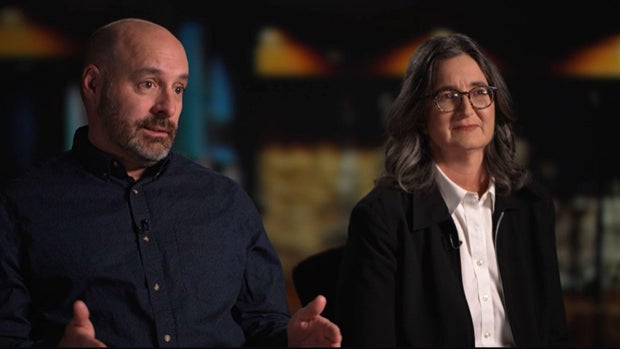
Kouri Richins trial jurors Eric and Laura. “Based upon the testimony and the evidence we saw against Kouri … I came to see her as pretty cold and pretty calculating,” says Eric. “She basically sacrificed … her husband to get what she wanted,” said Laura.
CBS News
Eric | Juror: I shared that I thought the evidence was devastating against Kouri and that she was guilty. … I think that … opened the door, to other people to share exactly where they stood.
And when the decision was made to vote, the rest of the jury agreed—not just that Kouri murdered Eric — but that she previously attempted to kill him with that poison laced Valentine’s Day sandwich, and, that she committed two counts of insurance fraud, and forgery.
On March 16, 2026, Judge Richard Mrazik read the verdict:
JUDGE RICHARD MRAZIK (in court): “Count one aggravated murder, we the jury unanimously find that the defendant Kouri Richins is guilty of aggravated murder.”
Kouri Richins was stunned as she learned she was found guilty of all five counts related to Eric’s death, says her friend Greg Hall.
Greg Hall: Totally unexpected. She was absolutely crushed and heartbroken.
Kouri Richins declined our request for an interview.
Two months later, on what would have been Eric Richins’ 44th birthday, Kouri Richins – now wearing a prison uniform – was back in court to receive her sentence.
Eric’s family gave heartfelt statements. His sister Amy emphasized the impact his loss has had on his three sons.
AMY RICHINS (in court): This crime didn’t just happen once. It happens every single morning when those boys wake up and realize their father’s still gone.
The boys were 5, 7 and 9 when their world was shattered. Today they are 9, 11 and 13, and through written statements read by each of their counselors, for the first time, the world got to hear from them.
The first statement read aloud was written by the youngest, Weston.
WESTON’S STATEMENT | Read by counselor #1: “When someone talks about Kouri, it makes me feel hateful and ashamed. She took away my dad. It’s made me have a hard time trusting people.”
The middle child, Ashton, called Kouri greedy and said she did not properly care for him and his brothers.
ASHTON’S STATEMENT | Read by counselor #2: ” … when we got hurt, you didn’t even care.”
He accused her of harming the family pets.
ASHTON’S STATEMENT | Read by counselor #2: You wouldn’t let me put my kitten in the garage for safety at night. And we found it eaten by raccoons the next day. You wouldn’t let us turn on and use the heater lamp for the chickens and bunnies, and they froze to death.
Carter, the oldest, said Kouri was often drunk and would lock him in his room.
CARTER’S STATEMENT | Read by counselor #3: “This happened pretty much daily. I feel angry that she locked me in my room. … I miss my dad, but I do not miss how my life used to be. I don’t miss Kouri. I will tell you that.”
All three boys asked the judge to give their mother, whom they only referred to as Kouri, the harshest possible sentence.
CARTER’S STATEMENT | Read by counselor #3 “… what she did is very sick …”
When it was their turn, Kouri’s friends and family pleaded for leniency. Her brother Ronnie.
RONNIE DARDEN (in court): … the injustice that’s occurred here in this courtroom, it’ll be righted in time. … And until then, little sister, just know … that I’m right by your side and I’ll always be right here for you. I love you.
Then Kouri Richins was allowed to speak. She did not testify at trial but now she approached the podium and used her time to address her kids.
KOURI RICHINS (in court): I will use any opportunity I can to get a message to you.
She says she has been cut off from them for the past two years.
KOURI RICHINS (in court): As much as you’ve been influenced into thinking that dad was murdered, that I took your dad from you, that is completely wrong and an absolute lie. … And just because someone may not be perfect, that’s a far reach for them to be capable of murder
Judge Mrazik had two options when considering Kouri Richins’ sentence — either 25 year-to-life with the possibility of parole or life in prison without parole — and he made it known he carefully considered each.
Kouri Richins listens as she is sentenced to life in prison without parole.
Pool
JUDGE RICHARD MRAZIK (in court): The Court’s duty is to make a decision, a weighty, long-lasting decision based on the best information available today. … Accordingly, Miss Richins … the Court hereby sentences you to life without parole.
For Eric’s family it was the end to a yearslong nightmare. Greg Skordas, the family spokesperson, says the true heartbreak is for the kids, who are now living with Eric’s sister Katie.
Greg Skordas: I can’t think of anything worse as a child to lose your father, except to know that it was because of your mother. I mean, think about that.
Produced by Ruth Chenetz, Asena Basak and Betsy Shuller. Elena DiFiore and Ryan Smith are the development producers. Emma Steele is the field producer. Alicia Tejada is the coordinating producer. Megan Kelly Brown is the associate producer. Michael Vele, Richard Barber, Marcus Balsam, Marlon Disla and Greg Kaplan are the editors. Anthony Batson is the senior producer. Nancy Kramer is the executive story editor. Judy Tygard is the executive producer.



 That’s also the date the Jazz made one of the more interesting deals ahead of the February deadline, acquiring